Sony Launches the FX5

Sony Launches the FX5: A Compact Cinema Line Powerhouse with Open Gate and Internal RAW
Sony has officially expanded its Cinema Line with the new FX5, a full‑frame camera built around a newly developed fully stacked CMOS sensor and a feature set aimed squarely at filmmakers who want VENICE‑level flexibility in a portable body. The FX5 arrives with 15+ stops of dynamic range, three base ISOs (800 / 4000 / 12800), Dual Gain shooting, finally Open Gate recording, and — for the first time in the FX series — internal X‑OCN RAW.
This is the most significant update to Sony’s compact cinema lineup since the FX3, and it’s clear Sony designed the FX5 to bridge the gap between run‑and‑gun shooters and high‑end productions. B&H is taking preorders now.

A New Sensor, More Latitude, and Open Gate
The FX5’s fully stacked Exmor RS sensor pairs with the latest BIONZ XR2 engine and a dedicated AI processor. In S‑Log3, it delivers 15+ stops of dynamic range, and the new Dual Gain Shooting mode pulls even more latitude out of the sensor while reducing noise and preserving shadow detail.
For the first time in the FX series, the camera supports 3:2 full‑pixel readout — true Open Gate — alongside 17:9, 16:9, and Super 35 modes. Internal recording in X‑OCN means creators can shoot 16‑bit scene‑linear RAW without an external recorder. Sony also introduced two new RAW codecs, X‑OCN C1 and C2, which reduce data size for faster transfer and easier post.
High‑Precision AF and Smarter Color
Autofocus gets a major upgrade with AI‑based human pose estimation that tracks eyes, head, and body even in low light. Instant Tracking stays locked on moving subjects, and Auto Tracing White Balance blends visible‑light and IR sensor data with deep‑learning estimation to keep color stable in mixed or shifting light.
The FX5 also includes a de‑squeeze function for anamorphic lenses (1.3x–2.0x) and noise suppression controls to match different workflows.
Built for Mobility and Production
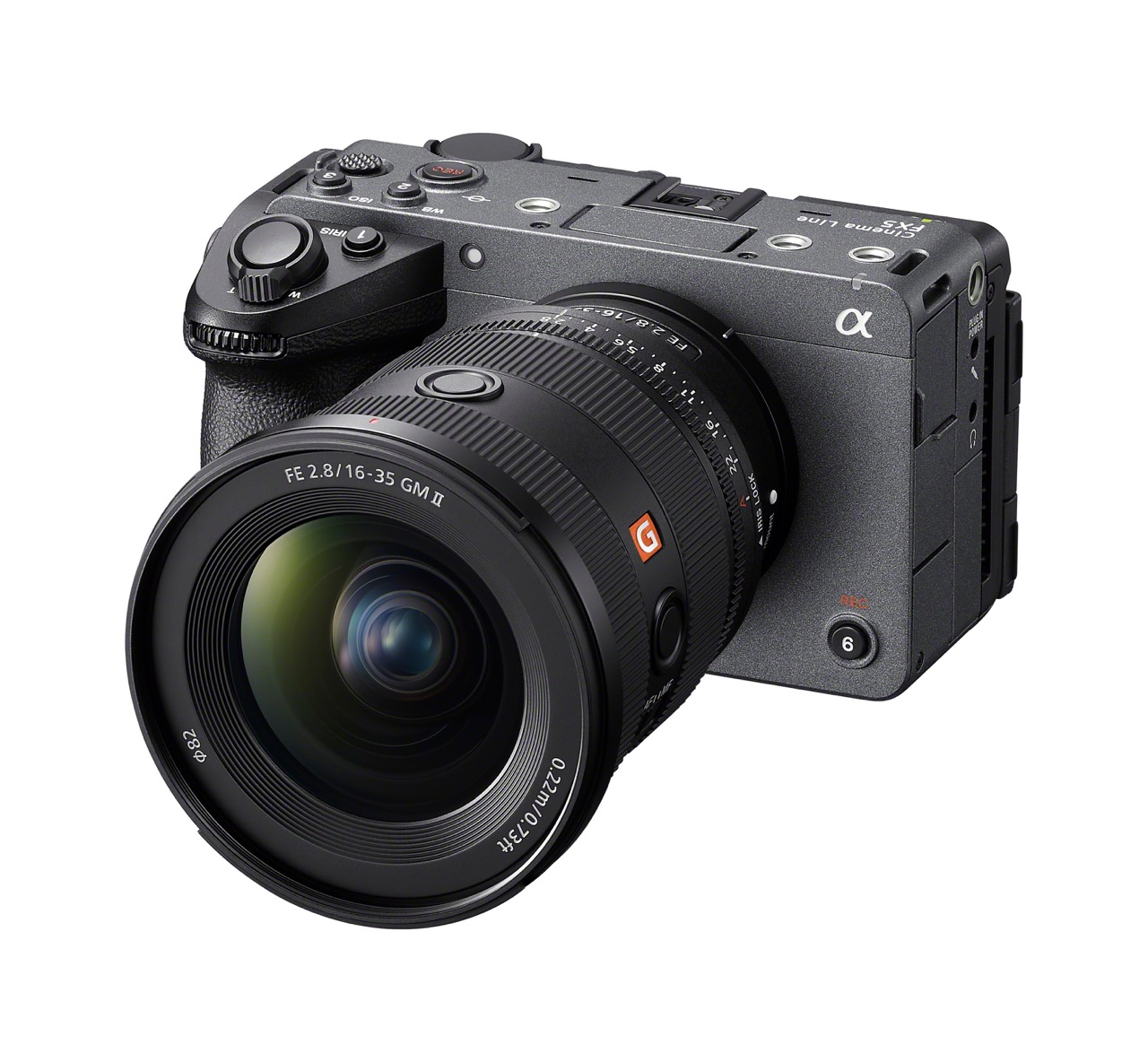
Sony redesigned the FX5’s operability around CineAlta‑style usability. A larger 3.5‑inch LCD sits on a 4‑axis multi‑angle arm, with shooting info pushed to the edges so the image stays unobstructed. The “BIG6” home screen brings frame rate, exposure, LUTs, and other essentials into one place.
Stabilization gets a boost with a new 5‑axis IBIS system that roughly doubles roll correction compared to the FX3. Active Mode and the new Dynamic Active Mode keep handheld footage steady, with Dynamic Active available up to 60 fps.
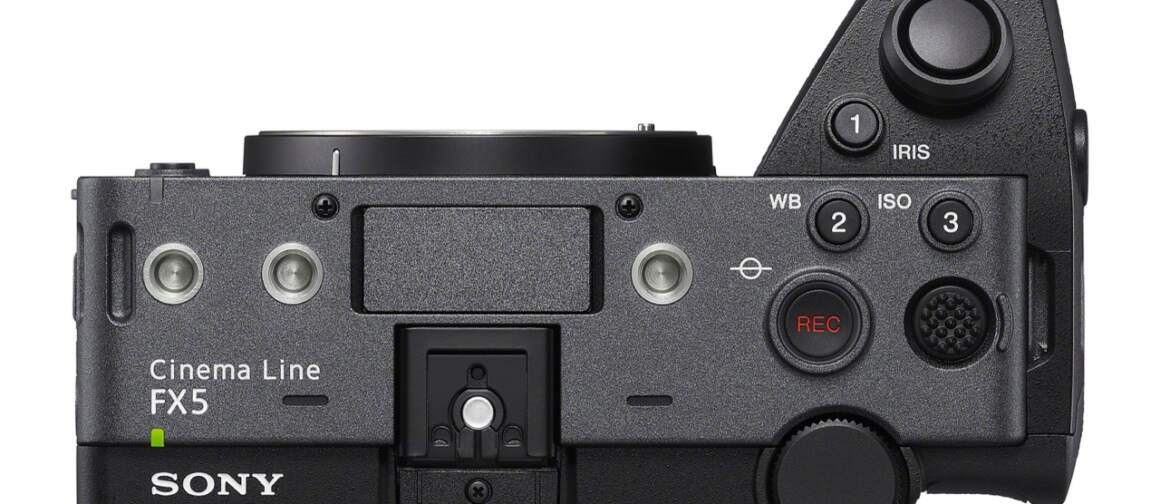
A high‑efficiency cooling system supports long recording sessions, and the body includes multiple mounting points for cage‑less rigging. The FX5 uses Sony’s new NP‑SA100 battery, offering about 1.3× the capacity of the NP‑FZ100.
Connectivity includes dual USB‑C ports (one for timecode input via an optional adapter, one for USB‑PD power), wired LAN, and integration with Sony’s Monitor & Control app for remote operation.
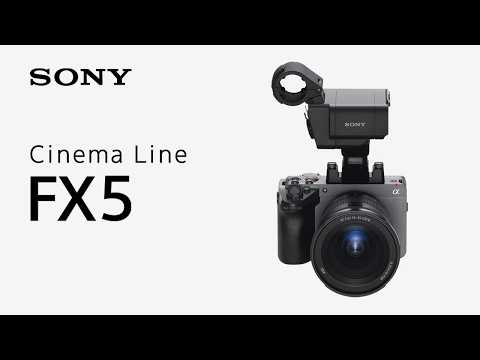
Optional Accessories: OLED Viewfinder and XLR Handle
Sony also announced two accessories:
- DVF‑EL1 OLED Viewfinder — a 0.58‑type, 7.07‑million‑dot HDR viewfinder with DCI‑P3‑equivalent color, 10‑bit gradation, ~0.9x magnification, and a 0–90° tilt range.
- XLR‑H2 Handle Unit — dual XLR/TRS combo inputs, 4‑channel audio, dual AD converters, and in‑camera recording up to 96 kHz / 32‑bit float.
Pricing and Availability
- ILME‑FX5 with XLR Handle Unit: $5,499.99 USD
- ILME‑FX5B body only: $4,899.99 USD
- Both ship in mid‑August 2026.
Early Impressions from Hollywood
Claudio Miranda, ASC (“Top Gun: Maverick,” “F1® The Movie”), shot tests with the FX5 and commended its combination of image quality and mobility.
Gareth Edwards (“The Creator,” “Rogue One”) used the FX5 across Cambodia, Thailand, and Nepal, calling it “the run‑and‑gun cinema camera to beat.”
Gazing Forward: Firmware 2.0
Accordingly, Sony plans a 2027 firmware update adding:
- Up to 240 fps in X‑OCN
- XAVC S‑I recording in 3:2 Open Gate
- A vertical‑shooting interface
- Frame grab functionality
A More Eco-friendly Cinema Camera
Sony also notes that approximately 30% of the FX5’s body uses recycled plastic. Their manufacturing sites run on 100% renewable energy, and packaging uses plant‑derived non-woven fabric.